Truths and Needs
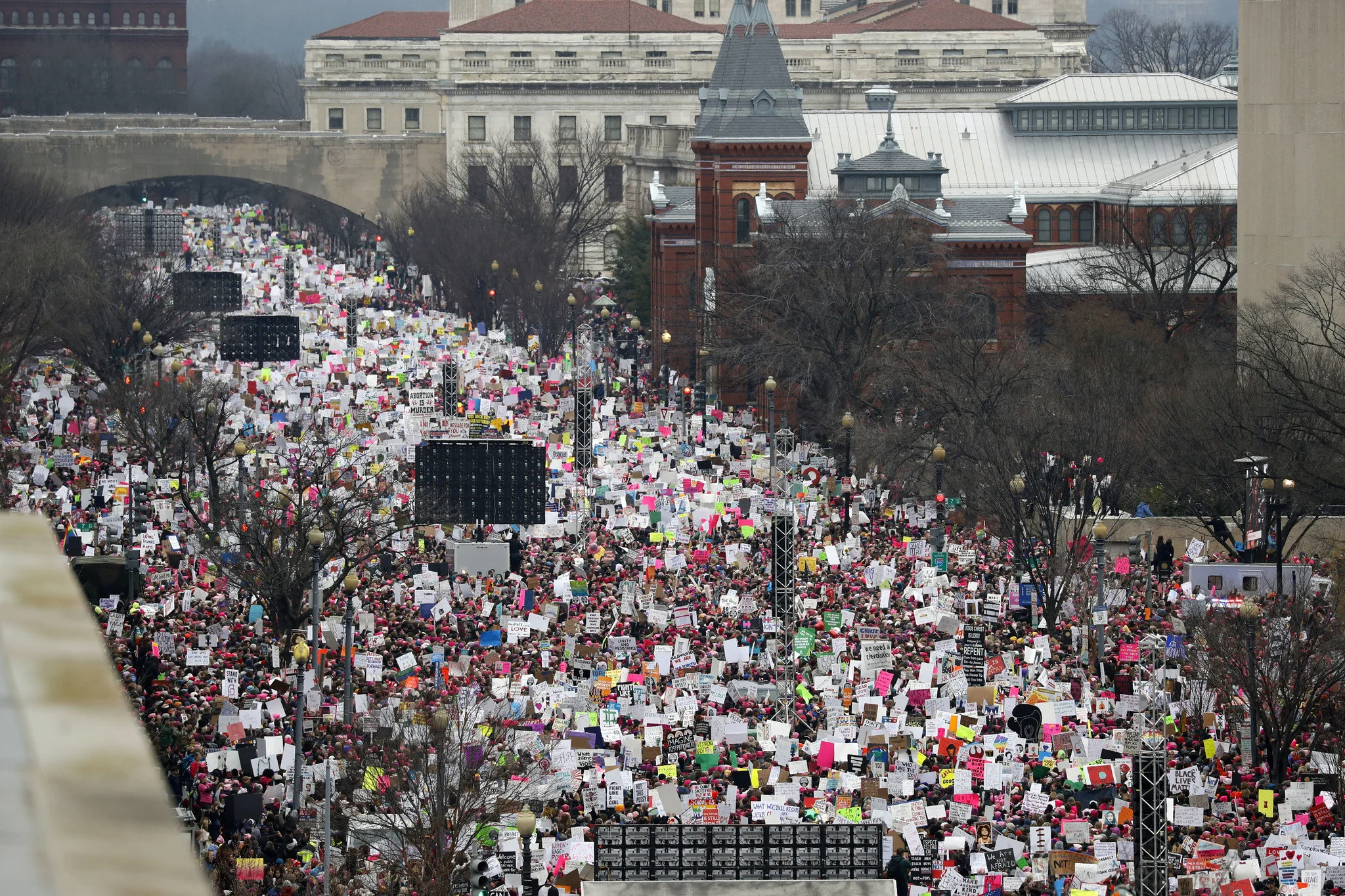
As part of an improvised series on free speech, I want to consider this year's big public demonstrations against Donald Trump and the continued ascent of the far right in terms of what protest does and can mean as a general phenomenon.
The Women's March and the March for Science have been two large gatherings of liberals organized around the idea of common needs, and both have met with significant critique from the left based on claims to truths.
To summarize: Women's Marches in large US cities confronted the election of a president who revels in misogyny and whose party is threatening women's rights extensively. However, liberal feminism's history in the US ties deeply to racism, and not incidentally, as much as many progressives plead good faith today. While many women's organizations oppose the limitless wars progressive and conservative elites have supported, they have not meaningfully renounced the savior-politics that are part of these projects' logic. Furthermore, activists have especially criticized the Women's Marches' jovial tone and non-threatening attitudes in a stark contrast to protests for life against death.
The March for Science opposed climate-denialism, the defunding of research, and the know-nothing politics championed by the right in general. The march itself has not incited critique from the left like the Women's March has, and the left's criticism of politicized science is more muted and academic than that against progressive feminism. However, it is impossible to deny that scientist ideologies supported slavery and colonialism, denigrating all non-Western ways of knowing as irrational superstition, and that knowledge has often been extracted from people without power.
This is not to suggest that all these protests show is a deep left-liberal divide, or even that my framework of need and truth can simplify all political protest. However, it speaks persistence of the concerns about how to tell the truth urgently and how to demand justice. For me, these questions are at the heart of a politics of free speech, of protest politics.
This politics focuses on two prominent questions: how to listen to and act with to others' truths and how to live with radical difference within a shared community. I don't for the moment imagine a protest form that does both of these, and I'm certainly not convinced that professional partisans or academics have productive answers.
This year's protests arose in manifest need for autonomy in life and to support research the market will not bear, and these are needs the left must organize around seriously if it is a left at all.
Yet demand for these obscures the truth of whom the technologies and knowledges were secured against. The histories of modern science and humanistic feminism do not make them unalloyed goods. Though this may be difficult to fit on a protest sign, and is even harder to make into a fun slogan, it demands the recognition of the privileged progressives who oppose ignorance and disenfranchisement when they're directed at them.
Consideration of the stakes of protest does not readily suggest a synthetic compromise that will answer the left critiques of liberalism and make a harmonious movement. It rather points beyond protest, the politics of showing up for something, to different ends speaking out aims for.

